Your Website Isn’t a Billboard. It’s a Sales Rep. Here’s Why Yours Isn’t Closing.
Your Website Has One Job: Website Conversion Optimization
A billboard has one job: get seen.
A website has one job: get people to take the next step.
That’s website conversion optimization in plain English.
That next step is different for every business:
Book a call. Request a quote. Buy the thing. Schedule the visit. Start the demo.
Website conversion optimization is the work of making that next step obvious, easy, and believable.
Not “pretty.” Not “modern.” Not “we redesigned the header again.”
Website conversion optimization is about making your site close.
If Your “Sales Rep” Is Confusing, People Leave
People don’t explore websites the way we wish they would.
They scan. They judge. They bounce.
If your site doesn’t answer three questions fast, you lose them:
- Am I in the right place?
- Can you solve my problem?
- Can I trust you?
When those answers are fuzzy, conversion optimization gets expensive because you’re paying for clicks that don’t turn into leads.
The 9 Likely Reasons Your Website Isn’t Closing
Reason #1: Your headline is about you, not them
If your hero headline says “Welcome to our website” or “Innovative solutions,” your site is basically saying nothing.
Your visitor is thinking: “Cool… but can you help me?”
Website conversion optimization starts by making the first screen about the customer’s problem and the outcome they want.
Keep it simple: problem, promise, and a clear next step.
Reason #2: Your next step is weak, hidden, or awkward
“Contact us” is not a call to action. It’s a suggestion.
“Submit” is worse. It’s a shrug.
A closing website tells people exactly what happens next:
“Book a 15-minute call.” “Get a quote in 24 hours.” “See pricing.” “Schedule service.”
That clarity is CRO in real life.
Check you page speed here.
Reason #3: Your page has zero proof or trust elements
If your website is all claims and no proof, people assume it’s fluff.
Proof is what makes a stranger feel safe:
Reviews. Case studies. Before/after. Numbers. Logos. Photos of real work.
Here’s the rule: every big claim should have a “receipt” close by.
CRO is not just buttons. It’s trust.
Reason #4: Your site is slow (and it screams “messy”)
If your site loads like it’s on dial-up, people leave.
And even if they stay, it feels sloppy.
Speed is not only a tech issue. It’s a trust issue.
Fast sites feel sharp. Slow sites feel risky.
Conversion optimization includes performance because people don’t hand money to websites that feel broken.
Reason #5: Your mobile experience is a mess
Most of your traffic is on a phone.
If your mobile menu hides the one thing people need, you’re losing leads quietly.
Buttons too small. Forms too long. Popups blocking the screen.
That’s not design. That’s friction.
Conversion optimization means mobile first, not “mobile eventually.”
Reason #6: Your form or booking flow is painful
If booking a call takes 11 fields, a login, and a captcha that hates humanity… people quit.
Your best leads are busy. They’re not here to prove they can click bicycles and stoplights.
Keep forms short. Make booking easy. Confirm the next step.
This is basic CRO.
Reason #7: Your “message match” is broken
This one is sneaky.
Your ads or SEO might promise one thing…
…and your landing page talks about something else.
Example: the ad says “Same-week appointments.”
The page says “We offer quality service for all your needs.”
That gap kills trust.
Website conversion optimization includes message match: the promise that got the click must be the first thing the page delivers.
Reason #8: Your tracking is lying to you
This one hurts because it makes you chase the wrong problem.
We see it all the time:
Forms that don’t count as conversions.
Conversions that fire twice.
Phone clicks that aren’t tracked.
Spam leads counted as “wins.”
You can’t improve conversions if your scoreboard is broken.
Reason #9: Your follow-up system is weak
Your website can hand you a lead. It can’t chase them.
If leads sit for hours, the “website isn’t closing” problem turns into a “we didn’t respond” problem.
This is where the partner advantage shows up.
We don’t just build pages—we connect the page to the system: forms, CRM, notifications, and follow-up.
Conversion work doesn’t end at the thank-you page.
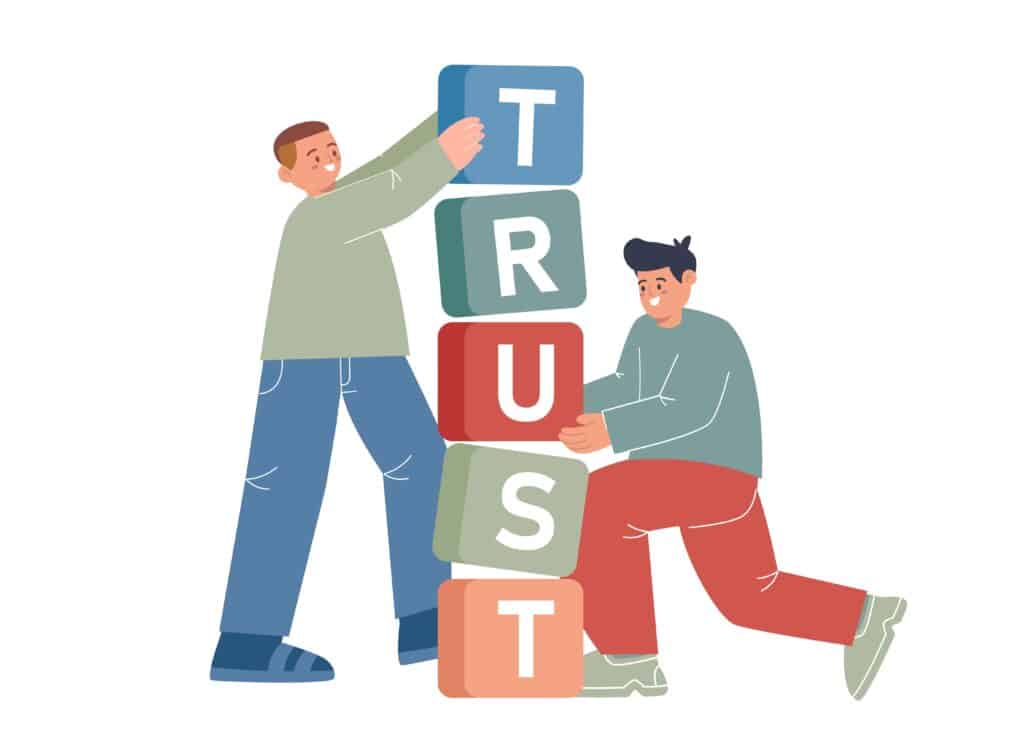
The Trust Forumla That Makes a Website Close
Here’s what most websites are missing: a trust stack.
This is where website conversion optimization usually wins or loses.
Not a wall of text. Not a 3-minute brand story. A trust stack.
A trust stack is a few simple things placed in the right spots:
- Clear proof (reviews, results, client names).
- Clear process (what happens after they click).
- Clear expectations (timelines, pricing ranges, service areas, guarantees).
- Clear human signals (real photos, real names, real faces).
- Clear risk reduction (“Here’s what to expect” and “Here’s how we handle issues”).
Website conversion optimization gets easier when trust is built into the page instead of hoped for.
What We Do in a Website Conversion Optimization “Fix Week”
When we take over a site that isn’t closing, we don’t start with vibes.
We treat it like a website conversion optimization sprint: fast fixes first, then testing.
We start with the leaks.
Here’s the usual order:
First, we verify tracking and conversions so we know what’s real.
Then we fix the first screen (headline + offer + CTA) so the page has a job.
Then we add proof where the buyer needs it (not buried on page five).
Then we remove friction: speed, mobile, forms, booking.
Then we tighten message match so the promise matches the page.
Then we set up a simple testing plan so improvements compound.
That’s website conversion optimization the way it should be: practical, measurable, and built to close.
Three “We See This All the Time” Website Fails
The CTA goes to a dead page.
Yes, really. The button is broken. Leads don’t vanish. They just never arrive.The phone number is wrong or unclickable on mobile.
If someone wants to call and can’t, they don’t email. They leave.The form sends the lead into a black hole.
No confirmation. No alert. No follow-up.
That’s not lead gen. That’s lead loss.
If you want to stop guessing, conversion work starts with making sure the basics actually work.
A 10-Minute Test: Would You Hire Your Website?
Open your homepage on your phone.
Can you tell what you do in 5 seconds?
Can you find the next step in 10 seconds?
Click your main CTA.
Does it feel easy, or does it feel like paperwork?
Submit a test lead.
Did you get a confirmation?
Did your team get notified?
If nobody gets alerted, your website is basically dropping leads in a trash can.
If any of this feels rough, you don’t need a new logo.
You need website conversion optimization.
DIY vs Partner: The Honest Call
If you have time, a sharp internal owner, and clean tracking, you can fix a lot yourself.
But most business owners don’t have time to run tests, write copy, fix tech issues, and babysit a site.
You have a business to run.
That’s why we exist.
If you want website conversion optimization handled without you becoming the project manager, that’s our lane.
And here’s the bonus: we don’t stop at “marketing.” We fix the messy tech behind it too—tracking, forms, integrations, and the systems that make leads show up.
Your clients have their specialty.
Ours is making your website close, fixing the tech behind it, and keeping the voice consistent across the whole journey.
We’re not here to hand you homework.
We’re here to be the partner that gets it done.
Ready for Website Conversion Optimization That Closes?
If your website isn’t closing, we can fix it.
We’ll audit the leaks, clean up the tracking, tighten the offer, and run website conversion optimization in a way you can actually measure.
If you want a site that sells while you sleep, let’s talk.